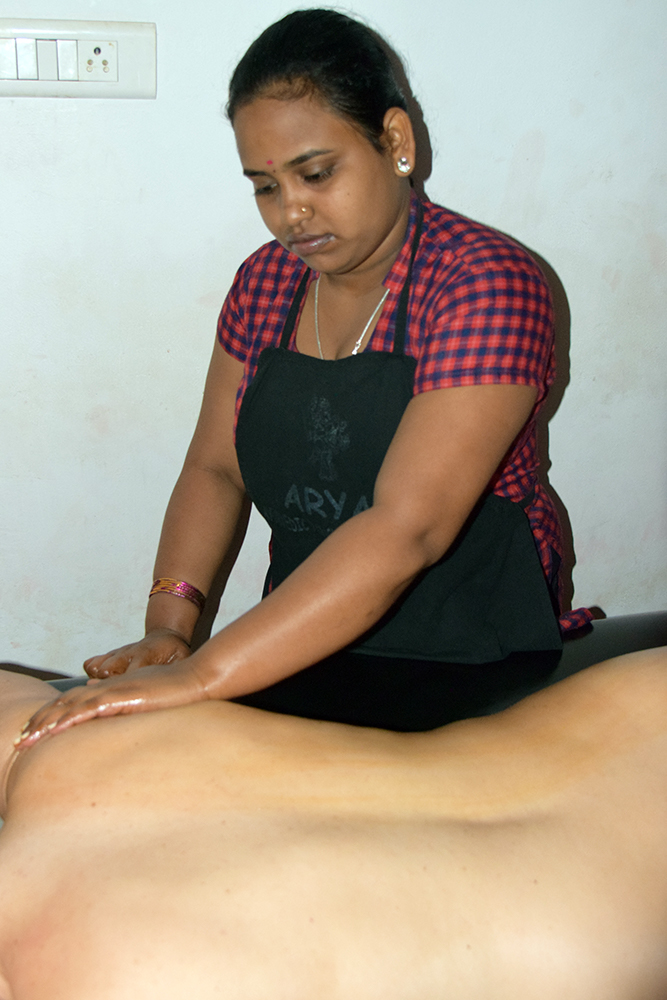
Ayurveda, the age old „science of life“ understands human body as a union of the body, mind and soul. These inseparable entities complement each other in our journey through life. According to the ayurvedic concepts, real health is not the state of having no diseases. Real health is the state of perfect harmony of the body, mind and soul. Real health triggers endless positive and creative energy.
Ayurveda recognizes that the whole of nature, including humans, reflect each other in the form of macro- and microcosm. Even though everyone is made of the same components, the proportion of these components in each individual is unique, making everyone distinct from another one. This recognition of individuality is one of the hallmarks of Ayurveda science.
Ayurveda is the only medical method in the world that provides a holistic approach to health in a scientific manner. This time-tested medical science, its efficient methods of treatment and potent medical preparations fully satisfy today‘s requirements. Ayurveda is not only complementary to western medicine. Ayurveda provides, in addition, substantial philosophical insights into health care concepts.
Panchakarma is an essential core of Ayurveda. Customized for each individual patient, Panchakarma procedures follow a specific program of treatments that result in purification, rejuvenation and regeneration. Diet, ayurvedic herbal medicines, yoga and meditations facilitate the healing and regeneration processes.
Ayurvedic therapy is known to be particularly effective for the prevention and cure of chronic diseases.
First I have to tell a little bit of myself to better understand the following: I've had serious skin problems for 10 years. As I am a doctor, I've easily seen the best dermatologist and health professional in France. I went to special spa treatments for months without any result. I did acupuncture, homeopathy, naturopathie, magnetisme, treatment with plants, essential oil and so on...for years. Almost no result. So I ended up appliying huge amount of cutaneus cortisone and other kind of immunosupressive cream. 50% result but with lots of side effects.
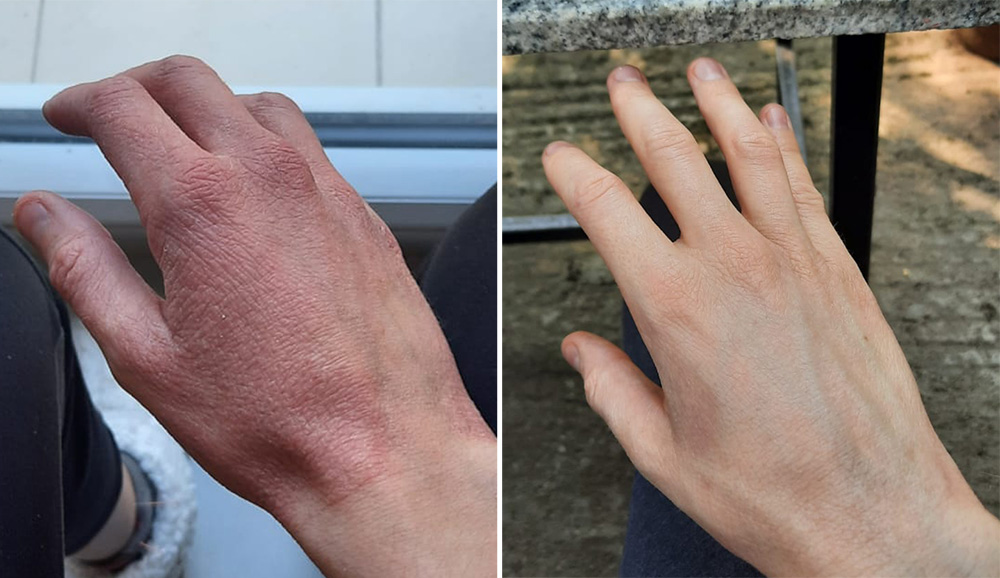
Hands before and after treatment.
After 2 weeks in Arya center I do not need any chemical cream any more. My skin is as beautiful as 10 years ago. It is completely astonishing with only 2 weeks treatment! But not only my skin improved; also sleep well again whereas I was almost insomniac; have again energy, appetite and such a better mood.
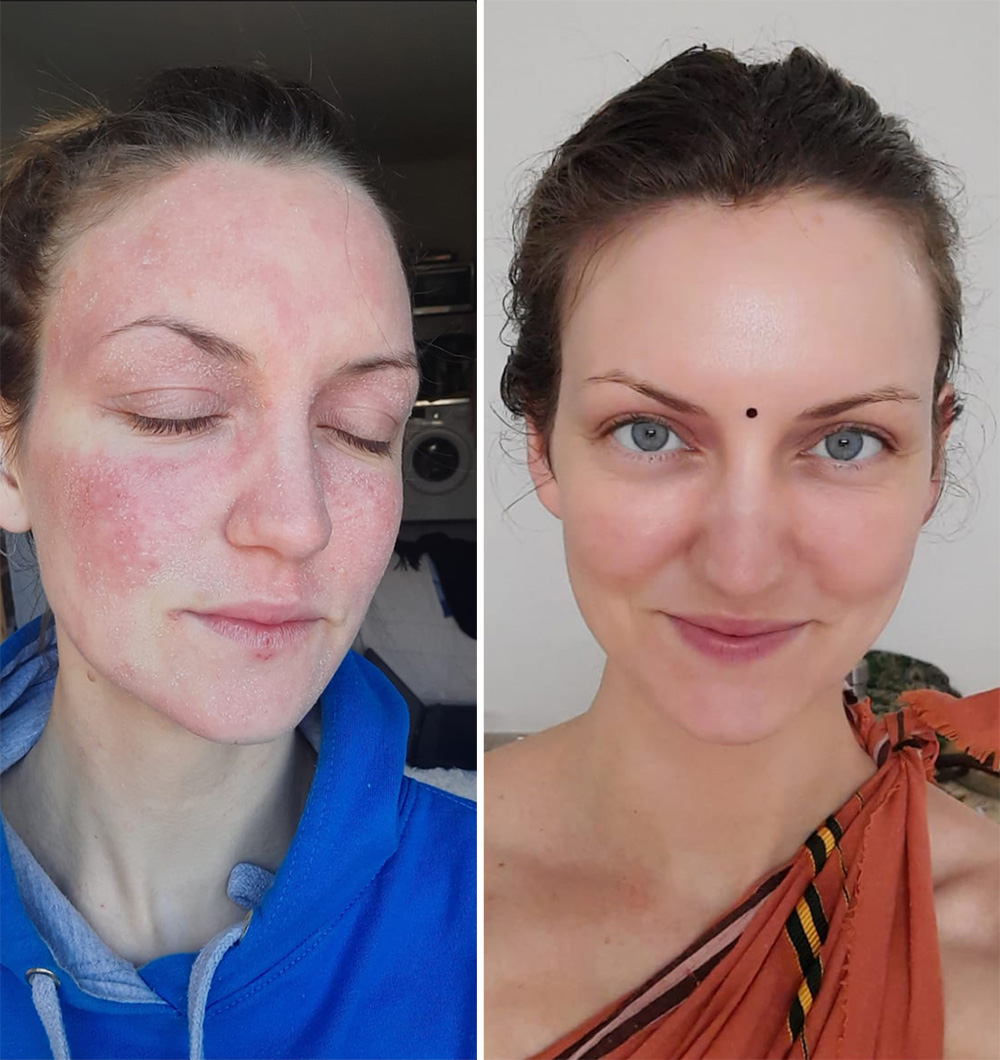
Face before and after treatment.
I think theses results were possible not only because of the treatment itself but because this center is a little paradis where everyone does his best for us to feel the best:
Thank you so much for everything and especially your kindness.
Happy patient
January 28, 2022
Our first stay at the Arya Clinic was a very pleasant experience. Panchakarma treatment has had immediate results and I am convinced of the long-term results too. Healing the physical body is a process that I am glad to have started here and I am grateful to the Arya team, and especially to dr. Bhadran, for their support and personalized treatment.
Thanks also to Mr. Ajiannan and the restaurant team for delighting us with tasty vegan dishes.
Both my wife and I are looking forward to returning.
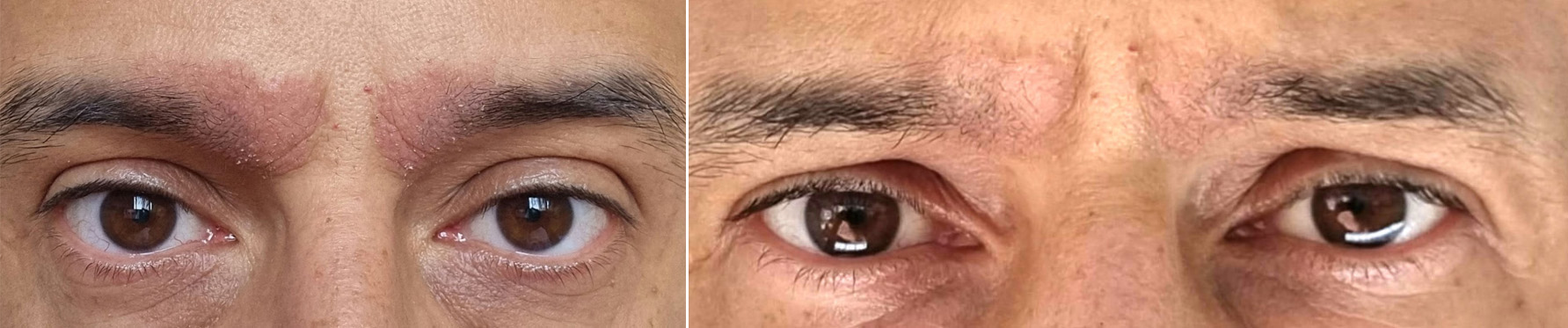
Face before and after treatment.
Adrian
 Dr. Bhadran CK
Psoriasis is a chronic autoimmune disorder that causes a rapid buildup of skin cells which generates scales on the skin surface. Typically skin cells grow deep in the skin and rise to skin surface and then shed off. But in psoriasis a rapid overproduction leads to buildup of skin cells.
Incorrect food habits and polluted environment can affect our blood and immune system so much that we get into skin problems like acne, eczema, psoriasis, etc. There is limited scope for the treatment in modern science and available ointments and medicines have adverse effects.
But in Ayurveda effective medicines with no side effects are available. Ayurveda also emphasizes Nidana parivarjana, i.e. avoiding the causative and triggering factors as first line of treatment to prevent the manifestation of the disease and to improve the quality of life of the patient.
 Dr. Niveedha Bhadran
Sinusitis also known as rhinosinusitis is an inflammation of the mucous membrane lining the nasal passages and sinuses, usually caused by an infection.
The sinuses are hollow air filled cavities in the skull. They help to maintain pressure, air circulation and protect as a shock absorber the internal organs of the skull. Sinuses are lined with membrane which secretes mucus that traps and drains out any germs or bacteria, in exchange air is filled. But when the sinuses opening into the nose are blocked, excess mucus is produced which leads to inflammation.
Sinusitis is in Ayurveda categorized as kruchrasadhya/yapya (difficult to treat/ control/ cure completely). In addition, recurrence can occur due to unavoidable causes like climate change, exposure to dusts, smoke, pollens etc. However ayurveda medicines give a significant relief to the symptoms without any side effects. In our clinical experience we observed that those who have done regular panchakarma followed the Rasayana properly had a reduced recurrence.
 Dr. Syam Dayal
Rheumatoid arthritis (RA) is a progressive autoimmune disease that initially causes joint pain and swelling but can result in bone erosion and joint deformity. This chronic inflammatory disease can affect a variety of body systems including the skin, eyes, lungs, heart and blood vessels. It is estimated that up to 1 % of the world population suffer of this major serious health problem.
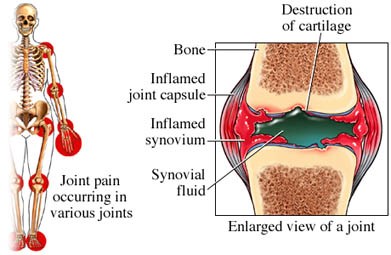
Unlike the Allopathic approach where exact causes of RA are still not clear, Ayurveda has listed a variety of factors contributing to Amavata or RA. In addition, Ayurvedic approach does not limit to the removal of the symptoms of Amavata but also focuses on improving the health status of the patient post the treatment using a variety of nourishing and rejuvenating therapies. Ayurvedic treatment combined with strict diet and exercises has a high success rate in treatment of Amavata.
Dr. Bhadran CKObesity and overweight are defined as abnormal excessive fat accumulation that impairs health of an individual. Commonly used indicator to classify overweight and obesity in adults is the body mass index (BMI), defined as a person’s weight in kilograms divided by the square of the height in metres (kg/m2). BMI greater than 30 is diagnosed as obesity.
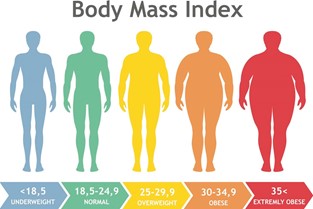
Ayurveda recommends a multidimensional approach in the management of obesity, Sthoulya or medhoroga. The treatment is planned according to the causative factors. A restricted diet regimen along with regular exercises ensures a successful weight loss. A person who follows pathyaapathya maintains a healthy weight.
Dr. Niveedha BhadranDysmenorrhea or painful menstruation refers to cramps in the lower abdomen before or during the menstruation. The pain starts from the lower abdomen and radiates to low back and the inner thighs. Other symptoms include nausea, vomiting, diarrhoea, headache and fatigue. It is the most common gynaecological problem among female patients, sufficient to incapacitate daily activities.
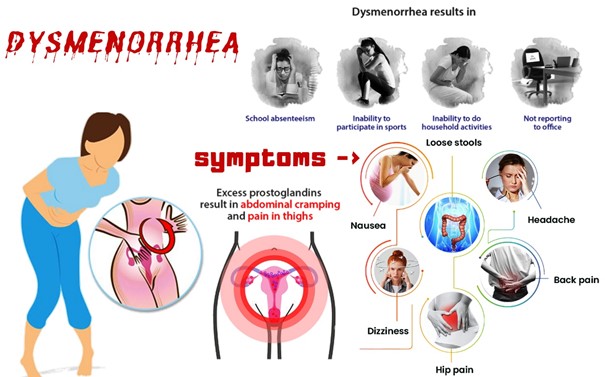
Ayurveda has proven to have effective treatments for dysmenorrhea, Kashtaartava. These aim at correcting the aggravated vata and removing any obstruction for the free flow of menstrual blood. In addition, it is recommended to follow specific diet advices, pathy-apathya.